Kathleen Rogerstag:kathleenrogers.co.uk,2016://12016-02-05T13:33:59ZKathleen Rogers is an artist & professor of media arts and science based in the UK. Her work is primarily concerned with science and technology.Movable Type 3.31 COSMOPOLITICAL FUTUREStag:kathleenrogers.co.uk,2016://1.702016-02-03T11:41:49Z2016-02-05T13:33:59ZCOSMOPOLITICAL FUTURES, THE ANTHROPOCENIC HUMAN Cosmopolitical Futures, The Anthropocenic Human series reflects my long time interest and research in foundational studies in theories of quantum physics and the nature of nature and the properties of living matter. In recent projects...
COSMOPOLITICAL FUTURES, THE ANTHROPOCENIC HUMAN
Cosmopolitical Futures, The Anthropocenic Human series reflects my long time interest and research in foundational studies in theories of quantum physics and the nature of nature and the properties of living matter. In recent projects – Black Lace and the Stem Cell work in particular, I alluded to methodological approaches based on Barad’s theories and the counterintuitive interpretation of quantum physics; that an object of investigation cannot be accessed outside of human conceptual frameworks to address and provide insights into the nature of causality, identity and nature. Barad forms an emergent zeitgeist in cultural theory/philosophy (Stengers, Bennett, Braidotti, Latour,Haraway) making connections between vitalist materialism, science and politics and ethics. As environmental changes force themselves into our physical consciousness we find ourselves re-thinking connections between politics, nature and humanity. Stengers, term, Cosmopolitics, stresses the relationship between the political order and scientific models of reality. Barad proposes that agency does not originate in human intention but resides in all of matter, suggesting that matter bears the mark of human agency in ways that release human intention. Her radical ontology proposes the collapse of partitions between mind and matter; wanting us to re-consider ethics, sentience and values within the new diffractive methodology she calls “Agential Realism”. AR accounts for how we iteratively rework the ‘objects” that we study. Fixed notion of “humanness’ have been dramatically transformed by posthumanist theory and the advanced sciences of transgenics biomedicine and biomimesis. The philosopher, and founding quantum physicist Niels Bohr made account of ways in which words and worlds are inextricably linked as discursive and material practices. He understood the intentional state of mind as arising from complex networks of human and non-human agents and ecologies of material conditions that exceed an individual and he saw how the paradoxical challenge for humankind was to make meaning and intelligibility in the light of unintelligibility and in doing so he endorsed, trans disciplinary creative processes and practices of poetry and the visual arts.
About the Artisttag:kathleenrogers.co.uk,2016://1.102016-02-03T11:14:44Z2016-02-05T12:41:50Z Kathleen Rogers is a London based contemporary artist, working across interdisciplinary fields in the arts and humanities that cross-over in the life sciences. Her artworks have been exhibited in public art museums and galleries, festivals internationally. Including the international...Kathleen Rogers is a London based contemporary artist, working across interdisciplinary fields in the arts and humanities that cross-over in the life sciences. Her artworks have been exhibited in public art museums and galleries, festivals internationally. Including the international exhibitions, Evolution Haute Couture at the Moscow Biennale, and the National Gallery for Contemporary Art, Kalingrad, Russia, Genesis the Art of Creation at the Paul Klee Museum, Bern, Switzerland, Lost in Lace at the Birmingham City Museum Art Gallery, Crossing Over - Art, Science and Biotechnologies: at the Royal Institution of Great Britain London and Inside, Arte e Ciencia at Cordoaria Nacional, Lisbon, Portugal. Her installation and video projection artworks are inspired and informed by the scientific disciplines of cell biology, molecular genetics and the biological sciences. She collaborates with others in an interdisciplinary context to develop artworks on the themes of consciousness, ecology, biology and genetics.
“When artists are provided with privileged access to laboratories and enabled to work alongside established senior research scientists, a shared responsibility for the negotiation of ethical boundaries and procedure becomes necessary. Embedded residencies can potentially lead to new collective expertise and case studies that build real ethical connections between the arts, humanities and science. The arts can highlight public discussion on the limits of science, help to build bridges between stem cell research and applied medicine and engage public audiences with research that effects us all”.Kathleen Rogers 2016Some background
In 1985 she obtained her MA degree in Experimental Media from the Slade School of Art London University College, UK.
Hisorically archived exhibitions include, the Central Space Gallery (London, 1990), the Exeter Memorial Museum (Exeter, 1991), the Walter Phillips Gallery (Canada, 1992), the Virtual Museum (Cleveland, 1995), the Belluard Bulwark (Switzerland, 1996), the Institute of Contemporary Arts (London, 1996), the Centre for Contemporary Arts (Vilnius, 1998), the Millais Gallery (Southampton, 1999), the Kettles Yard Gallery (NOISE Project, Cambridge, 2000), the Headlands Centre for the Arts, (Marin, USA, 2001) the Lab (The Gateway Project, San Francisco, 2002), the National Gallery for the Arts, (Onufri, Tirana, 2003) and many others; also within the frameworks of "State of the Image" (Antwerp, Cultural Capital of Europe, 1993). Her video works have been screened at festivals such as Ars Electronica (Linz), Femme Totalle (Dortmund), the European Media Art Festival (Osnabruck), the New Visions Media Festival (Glasgow), the Video Fest (Berlin), Konzept Art von Frauen (Bremen), Video Positive (Liverpool), the Edinburgh Film Festival (Edinburgh) and others. Lectures and presentations given at different conferences and symposiums at venues such as the British Film Institute (London), the Royal College of Art (London), I.S.E.A. (Helsinki), the University of Wales ( Consciousness Reframed, Newport), Cambridge University (National Science Week, Cambridge), Berkeley University (American Association of Anthropology, USA), University of Arizona (Towards a Science of Consciousness), University of Northern Arizona (Arts, Culture, Nature, USA), also at the French Ministry of Culture, (Paris) and "Documenta X" (Kassel).
She is Professor of Media Arts and Science at the University for the Creative Arts based in Farnham, UK.
]]>
Welcometag:kathleenrogers.co.uk,2006://1.512016-02-03T10:35:05Z2016-02-05T12:38:13Z Welcome to my website. What follows is a combination of review, association and research - a place to store ideas, archive and share my artworks and process. In my visual arts research, as always, I'm trying to explore how...
Welcome to my website.
What follows is a combination of review, association and research - a place to store ideas, archive and share my artworks and process.
In my visual arts research, as always, I'm trying to explore how scientific aspects of human biology can become more directly accessible in emotional and aesthetic terms.
Through my work I seek to demonstrate how minimal, economic and explicit methods can be used to express the ambiguous epistemological status of living entities in genetic research. The arts give human meaning and value to scientific and technological enterprise but the artist’s role equally include shifting meanings, contexts and categories, framing and modifying experiments that challenge meaning and value. My arts research broadly consists of connecting and inscribing a mental life to material outcomes by melding differing epistemic cultures with precise ambiguity. I believe that research partnerships with science, technology engineering and medical research disciplines will lead to new hybrid forms of knowledge. Research cultures have different epistemic cultures but common to all are the inherent problems associated with framing and setting up meaningful experiments. The apparatus and experiment in the case of art as research can usefully contain a set of embodied strategies, philosophical propositions and theories that challenge taken for granted assumptions that scientific methods cannot approach or address such as who is the “I” doing the experiment and when does an experiment begin and end?]]>
STEMtag:kathleenrogers.co.uk,2013://1.642016-02-03T10:29:36Z2016-02-03T11:25:07Z Recent on-going artworks are based on an EPRSC funded, Pathways to Impact (PiA) residency at the University of Southampton in the School of Medicine on Stem Cells and Regenerative Medicine exploring the use of stem cells in the area...
Recent on-going artworks are based on an EPRSC funded, Pathways to Impact (PiA) residency at the University of Southampton in the School of Medicine on Stem Cells and Regenerative Medicine exploring the use of stem cells in the area of Bone and Joint research. My research engages with contemporary debates in biotechnology and stem cell research and I have developed numerous works through art and science collaboration that contribute to public critical understanding and discussion of these domains. Engendering public engagement with biotechnological, stem cell and regenerative medicine research, my work engages with the impact of these life sciences on human identity, culture and society. I have harnessed elements regenerative medicine space to create a new body of research, developing this most recent artworks on an EPRSC funded, Pathways to Impact (PiA) residency in the School of Medicine on Stem Cells and Regenerative Medicine exploring the use of stem cells in the area of Bone and Joint research.
The PiA (Pathways to Impact) residency was uniquely devised as a visual arts research project. The site-specific research was produced in association with Professor Richard OC Oreffo and the Bone and Joint Research Group at the Centre for Human Development, Stem Cells and Regeneration, Human Development and Health, Faculty of Medicine.
I co-ordinated regular visits to the department, thoroughly familiarizing herself with bone and joint, stem cell regenerative medicine. The research residency enabled close observation and artistic reflection on the science of osteo-specific differentiation, function and signaling pathways in stem cell populations. The aim is that my creative practice can contribute to a public understanding of the regenerative medicine space through art and science collaboration.
The work hints at ways in which transformative biological processes associated with evolutionary symbiosis can be harnessed as metaphors to interpret regenerative medicine. Exploring the different ways people might come to experience regenerative medicine, the work also reflects on how visual arts led research can improve public understanding of stem cell research.
PROCESS
Regenerative phenomena associated with stem cells touch on the deepest aspects of human identity. Stem cell transfer treatments replace non-functioning and dead cells at tissue sites within the body with healthy donor cells. The hope of medicine is that collections of induced pluripotent stem cells might one day come to form a biological resource for regenerative treatments and general medical use.
Kathleen is interested in how stem cell research can offer new generative metaphors for health and healing and how therapies suggest ways to extend the human lifespan and alter ourselves genetically. Her initial research looked at how stem cell utilization might delay and disguise the physical impact of ageing.
“Buckminster Fuller described the occurrence of structure in chemical elements not as things but as ‘patterns of inherently regenerative constellar associations of energy events’. The dynamic metabolism of each of our cells determines its growth or demise and the sustained presence of stem cells within the porosity of both the embryonic and adult brain, suggests holistic connections between periodicity, cell re-newel, cell death and the nature of mind itself.”
Mesenchymal Stem Cells (MSC), can differentiate differentiate in vitro or in vivo into adipocytes, chondrocytes and osteoblasts the progenitors cells of human cartilage and bone. Kathleen began looking at the shape principles governing the structuring of bone, its emergent mathematics and the geometry of its growth. The structuring of cellular growth is beautifully exemplified in the emergent architecture of bone.
THE WORK
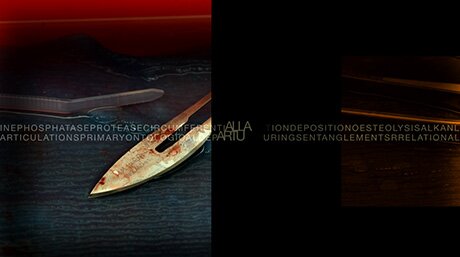
During the residency I was granted access to biological donor materials associated with embryonic, fetal and adult stem cell research. I produced over 2000 photographic studies of human donor derived tissue as the conceptual basis of a multi-screen video installation. Her visual research demonstrates how embodied, sensory encounters with digital media are intrinsic to the visual literacy of medical research. The resulting multi-screen, six-channel video and sound installation, Intra-actions and re-configurings, consists of horizontally aligned screens designed as a panoramic, landscape. Viewed in partial darkness, the work provides an audience with a reflective space and the work offers an emotional engagement with both the clinical and ethical dimensions of stem cell research.
The independently titled episodes dramatize biological procedures: Screen 1 Matter, Screen 2 Vascular, Screen 3 Viscera, Screen 4 Ossify, Screen 5 Primordial, Screen 6 Lacunae.
I applied poetics, moving image and sound to draw every day audiences to the science and art of stem cell research.
“The structural grammar of my work was inspired by the theoretical work of the Philosopher of Science, Karen Barad. Inspired by her concepts I applied graphic and text layering methods to examine how time based, visual and linguistic systems can regulate and dictate interior and exterior perspectives of objects. Dual streams of words composed from descriptive notations, poetry and genetic science are used to suggest parallel images, like labyrinths and mirrors. The work exploits the visual aspects of language and I use imagistic repetitions, tonal variants, scale and magnification to create a contemplative space. Virtual shadows and the sound track, composed of visceral heart pulses are used to invoke the infinite levels of reproduction of living cells in the human body. “
In addition to the installation I produced 15 photographic e-sketchbooks containing hundreds of images drawn from her visual research. These digital sketchbooks presented in landscape format echo the conceptual methods of the moving image installation. Thematic titles are conceptually re-versioned and the form is fluidic: pages may carry a single image or mirror pages found elsewhere; a text frame may directly relate to an adjacent image or may be repeated or carry references to a later image.
Barad, Karen, Meeting the Universe Halfway – Quantum Physics and the Entanglement of Matter and Meaning,
Duke University Press ]]>
Black Lacetag:kathleenrogers.co.uk,2013://1.632016-02-02T13:47:22Z2016-02-03T11:29:54Z Produced as part of an international contemporary art and craft exhibition, Black Lace is a site-sensitive video and sound installation commissioned for the UK Crafts Council 50/50 funded international lace textile exhibition, Lost in Lace, for the Birmingham City...
Produced as part of an international contemporary art and craft exhibition, Black Lace is a site-sensitive video and sound installation commissioned for the UK Crafts Council 50/50 funded international lace textile exhibition, Lost in Lace, for the Birmingham City Art Gallery and Museum. Museum lace archive conservator support enabled an off-site destructive micro-visual analysis of silk lace from a unique sample of antique Chantilly lace. The donor sample is beautiful virtuoso piece of 20th century lace, bought from Steinman’s in Piccadilly London forming part of Lady Cadbury’s archive collection. Hundreds of hugely magnified studies were produced using a Scanning Electron Microscope (SEM) in collaboration with scientific imaging specialists from the Biomedical Imaging Unit, School of Medicine at the University of Southampton. Using complex, digital methods these were post produced and re-composed to create a continuous, slow panning shot of lace montages arranged along the Z axis in virtual 3D screen space. The resulting continuous scrolling lace landscape is set against a multilayered, stochastic sound composition of larval silk moths devouring the mulberry leaves that fuel the production of the silk protein fibers.
The Black Lace project breaks customary patterns of approaches to the material culture of lace, re-framing it as a complex biomaterial with bio-economic and bioethical dimensions. Black Lace alludes to the lurking fault lines between nature and culture and the work follows on from my wider research themes that also make cultural and artistic connections to the practices and narratives of contemporary biosciences.
The dramatic acceleration of scientific fabrication techniques in the life sciences, wherein the structure and function of biological systems are designed and engineered into biomaterials and molecular machines is culturally pervasive. The fixed notion of “humanness’ has already been subtly transformed by advancements in transgenic technologies and medicine but most of us are not able to realize the fullness, meaning and impact of these scientific practices that reconfigure life
The decisive factor in using SEM was to visually evidence the underlying mathematics and structural torsions and twisting of Chantilly lace in close conjunction with the theoretically unfathomable and unimaginable complexity of the silk fibers. The human Chantilly net maker mimics polygonal networks found in nature but in the film, immensely magnified details reveal the lace’s intrinsic “otherness” and silkworm origins. The atoms, molecules and ecosystems deployed by the silk worms appear to operate like forces swelling out into shattered spirals. Each layered image in each scrolling scene of the film was technically drawn line by line by the deflections of a scanning electron beam operating in a vacuum. Each scene is intrinsically an image of lifelessness and the film is like a fossil. Human vision involves the register of light in the retinal nervous system and brain. The non-optical electron materialization of the Chantilly net in the installation alludes to processes of biophysical metamorphosis and other lurking frontier narratives drawn from the contemporary biosciences and synthetic biology. In the biotech context, the chemical co-alliance of humans and the insect species is spectacular in its imagination but in many ways can be seen to follow on from the 5000-year scientific techniques of Sericulture industry in Asian countries. Sericulture refers to the production of silk from the larval cocoon of the silkworm Bombyx mori. The silkworm has biosocial significance and vast economies and whole communities depend on the molecular proteins of its cast off capillary structure. The industrial killing and utilization of the silkworm can make us lose sight of the intrinsic mystery around its morphological developmental stages from egg, larva (caterpillar), pupa (cocoon) to adult moth and the fact that these intricate developmental mechanisms of metamorphosis are little understood by modern life science. Black Lace alludes to the lurking fault lines between nature and culture and the work follows on from my wider research themes that also make cultural and artistic connections to the practices and narratives of contemporary biosciences. The research outcomes represent a unique artistic, experimental approach to scientific imaging methods using Scanning Electron Microscopy (SEM) and fluorescing CLSM (Con-focal Laser Scanning Microscopy) building on paradoxical optical and quantum principles of image processing to forge a synthesis of hidden forms, wavelengths, signals and the instrumentation of matter. The project has resulted in transferable knowledge by extending the experimental use of non-optical microscopy as a “plastic” technical media for the production of art. The project extends the presentation of scientific imaging to encourage public engagement with the physics of non-optical bioimaging concepts and synthetic biology. The research engages in novel imaging production that extends the use of scientific imaging in the production of high-resolution HD video quality moving image display.
The work aims to provides an accessible public engagement platform for public debate and awareness of ethical and cultural issues arising from the biosciences.
Media:Video Projection and Sound Art
Duration: 8 minute - HD Video 16:9
Sound Z'ev
Editor Simon Allmark
International conference presentation for Crafts Council UK- Framing Dark Space.]]>
Bite Size - Dark Spacetag:kathleenrogers.co.uk,2013://1.622016-01-08T12:54:12Z2016-02-03T11:28:00Z Produced for Bite Size, Miniature Textiles an International group-touring exhibition devised by Prof Lesley Millar. Black Lace, Dark Space, is a miniature textile work. A fragment of 19th Century black silk Chantilly lace embedded on metal disk and thinly...
Produced for Bite Size, Miniature Textiles an International group-touring exhibition devised by Prof Lesley Millar. Black Lace, Dark Space, is a miniature textile work. A fragment of 19th Century black silk Chantilly lace embedded on metal disk and thinly coated with ionized gold particles is presented meticulously prepared as if for a Scanning Electron Microscopy imaging system. Conceived and displayed as a scientific relic, the fixed Chantilly lace sample represents the enduring residue of the Black Lace film installation project. The composite lace object alludes to the procedural methods of the non-optical, dark space imaging process, the unusual characteristics of silk and visualisation methods common to art and science. The work engages audiences with the creative, transformative methods of art and science. How matter is transformed from one substance to another and the importance of listening to materials to gain a greater understanding of the world.
Japan House Gallery, Daiwa Foundation, London
Gallery Gallery, Kyoto, Japan
Nagoya University of the Arts and Science
Gold coated Chantilly lace and palladium scanning electron micro-disc
]]>
Academictag:kathleenrogers.co.uk,2013://1.312016-01-08T09:06:22Z2016-02-05T12:16:06ZProfessor of Media Arts and Science AHRC Peer Review College and Panel Member 2008 - 2013 Bio-synopsis Kathleen Rogers is a London-based artist working with digital media, video, sound, photography and installation. Her media art practice intersects multiple disciplines, informed...
Professor of Media Arts and Science
AHRC Peer Review College and Panel Member 2008 - 2013
Bio-synopsis
Kathleen Rogers is a London-based artist working with digital media, video, sound, photography and installation. Her media art practice intersects multiple disciplines, informed by an interest in social and political and cultural issues in our converging technological landscape and the modification of biological matter through nanotechnology and gene transfer. She helped pioneer telecommunications art in the pre-web 80s, working with Roy Ascot to provide designs for telematic networking curricula that engaged with theories of cybernetics. For more than two decades she has worked in the exponentially expanding field of media art, gaining international recognition as an artist and scholar in communities of practice ranging from performance, video art and virtual telepresence, the sensory interfacing of the human body to robotics and bio-art. Her projects reside between the disciplines and technologies of the arts and sciences and her research interests explore affinities between life, consciousness, mind and technology. Her research contributes to debates in contemporary biotechnological discourse that challenge assumed boundaries between human and non-human entities in synthetic biology. Her interest in molecular science developed from her research in the 90’s looking at the mythical status of the maize plant in pre-scientific cultures and making links between biotechnology, the environment and concepts of the gene in ancient and contemporary Mayan culture in Mexico. Her work has been exhibited internationally, including representation in the Netherlands, Switzerland, Portugal, USA, Japan, Russia and Lithuania, Albania and is held in international public collections the UK and Russia.
Teaching Digital Film and Screen Arts at the University for the Creative Arts, Farnham
(0.5) FTE
Member of the UCA Professorial Working Group
Member of MPhil/PhD Progression Review Panel
Member of the UCA Research Ethics Committee
UCA Farnham Campus
The University for the Creative Arts at Canterbury, Epsom, Farnham, Maidstone and Rochester
Academic Research Summary
QUALIFICATIONS
1983 - 1985 The Slade School of Fine Art, University College, London, UK.
Fine Art, Experimental Media (PG Dip)
1980 - 1983 Wimbledon School of Art, London, UK. Fine Art, BA (Hons)
ACADEMIC POSITIONS
Since 2009 and current, Professor of Media Arts and Science
Since 2001 and current,Senior Lecturer in Digital Screen Arts 0.5 (FTE), UCA, Farnham.
MPhil/PhD current research degree supervision:
Maria Manuella Lopes (1st) Representational Strategies on Alzheimer’s Studies: a Practice-based Art Research in a Neuroscience Laboratory (based in Lisbon)
Vicky Smith (2nd) Feeling Negative and Losing Control: Representing Ambivalence by attacking and repairing Camera-less Film
Previous Full Time Roles at UCA between 2001-2005
2004/2005 F/T Programme Leader (acting) for Television Drama Production (UCCA) Farnham.
2003 F/T Programme Leader (interim) for Digital Screen Arts (UCCA) Farnham.
Previous UCA Research Role
1997- 2000, F/T Research Fellow in Digital Art and Technological Culture, UCCA, Farnham.
Post Graduate Community
Since 2001 MA seminars in diverse conceptual and media art, art and science categories.
PREVIOUS ACADEMIC
1993 - 1995 F/T Course Director, Postgraduate School of Television and Imaging, Duncan of Jordanstone College of Art, University of Dundee. Scotland.
1992 -1993 Time Based Art 0.2 (FTE) Wolverhampton College of Art
1985 1986 Telematic, Net-Art Media 0.4(FTE), Newport College of Art (University of Wales)
Visiting Academic
2003 University of Westminster, Creative Media Practise (BA Hons)
Stage 3 Unit: The History and Theory of the Electronic Image
2003 University of Westminster, MA Fine Art Research
2003 Oxford Brookes University, Fine Art Academic Research Seminar
Previous Academic 1986 - 2003
St Martins College of Art, Chelsea School of Art, Oxford Brookes University, University of Westminster, Slade School of Art, Nottingham Trent University, Wolverhampton College of Art, Middlesex Polytechnic School of Art. Sheffield City Polytechnic, The Royal College of Art.
ACADEMIC RESEARCH RELATED
2009 – 2013 Appointment to AHRC Peer Review College
Member of the UCA Professorial Working Group
Member of PhD Progression Review Panel
Member of Research Ethics Committee
RAE Research submitted to RAE1996 (Grade 5), UCA 2000 and 2008
2008 - 2010 Visiting Researcher at The Art and Genomic Centre at Leiden University & New Representational Spaces, Art History Department, Amsterdam University, Netherlands. Ectopia at Gulbenkian Art and Science Foundation, Lisbon, Portugal.
2009 British Science Festival Production
Jam ! – Art, Science and Beyond
Supported by the University for the Creative Arts, the UCA Art Science & Culture Research Cluster and GaiaNova Productions, Jam, was part of the British Science Festival, hosted by the University of Surrey. Concept, development, production in collaboration with Adrian Holme for Art, Science Culture Research Cluster with consultancy from Bronagh Ferran.
PROGRAMME VALIDATION
2008 Validation Panel member, Digital Games Arts BA programme, Farnham, UCA
2008 Validation Panel member, MA programme, Digital Ekistics (on-line second life communities), Canterbury UCA
1992 Validation Panel member, MA programme, Time Based Media, Kent Institute of Art and Design
FURTHER ACADEMIC PROFILE
1991 to 1993 Duncan of Jordanstone College of Art and Design, Postgraduate School of Television and Electronic Imaging. Multidisciplinary Virtual Environment workshops for project weeks.
1993 The Royal College of Art, Kensington Gore, London, UK
Computer Related Design and Human Computer Interaction, project workshop going beyond metaphor within interactive design.
1991 The British Film Institute, London, UK. Commission by Tana Wollen, Head of Television and Projects. Three seminars for BFI staff on Virtual Reality, its technological development, its roots in cognitive psychology, computing, military training, its uses, old and new corporate investors, aesthetic/political appropriations, philosophical/theoretical implications.
1991 Virtual Environment workshops at Chelsea School of Art and Design, Postgraduate Time Based Media department & Saint Martins School of Art and Design, Postgraduate Film and Video department.
1993 Delegation of the Arts Plastiques, Ministry of Culture, Paris, France.
Participating artist, with scientists and philosophers as part of the digital salon consulting on how emergent and interdisciplinary methodologies in science and art might impact on future educational culture. Other participants included Anne Marie Duquet, Louis Bec. Brian Reffin Smith.
1993 Virtual Environment consultant, BBC Television for commissioning editor David Ross within production team of Cyberzone, virtual reality gameshow.
1991 – 1995 Artist Member of O+I – Organisation and Imagination, Artists Placement Group Founded by Barbara Steveni and John Latham.
1987 – 1988 Honorary Researcher in Computer Science and New Media at the Slade School of Art, University College, UK.
2008 Gallery presentation, Zentrum Paul Klee, Berne, Switzerland, Genesis the Art of Creation.
2007 Gallery presentation , Centraal Museum Utrecht, Netherlands, Genesis, Life at the End of the Information Age.
2001 & current, Alumni at the International Headlands Centre for the Arts, Marin County, San Francisco, CA, USA.
2001 – 2007, Board of Advisors, The Green Museum, on-line foundation of international environmental art, CA, USA.
1998 Gallery presentation, The Millais Gallery, Southampton University. Ingenious Transformations.
1994 Curator and speaker, Electronic Imaging at Women On The Verge, London Film-Maker’s Co-Op (LFMC): London
SELECT SPEAKER PRESENTATONS
1998 Documenta X , Hybrid Workspace, Kassel, Germany
Speaker, Technoscience. Vocabulary, Politics, Practice: MUTE London
Invited participant and speaker for MUTE, with Pauline van Mourik Broeckmann and Critical Art Ensemble on round table on Art and Genomics. Workspace-organisation, concept Geert Lovink, Pit Schultz
2000 National Science Week Event, Faculty of Divinity,Cambridge University, UK,
Speaker with Soraya de Chadarevian, Simon Schaffer, Malcolm Longair
2010 UCA Staff Research Conference theme, Interdisciplinarity and the Arts, Wellcome Trust Conference Centre. Keynotes: Michael Naimark, Zeigfired Zelinsky
Paper: We are all Water. Biological Synthesis and Cultural Evolution.
2001 The Third International Conference of Arts, Culture and Nature, Arizona, USA.
Speaker with multi disciplinary environmentalists making connections between the arts and environmental studies with The Green Museum and including Lucy Lippard and David Rothenberg
1998 Toward a Media Ecology, The Lux Centre, London, UK.
Devised by Maria Klonaris & Katerina Thomadaki including Michael Maziere
1996 Emergent Parallels, The Lighthouse, Wolverhampton, UK
Convergent Consciousness: The Birth of the Digital, Convergent Media, Technology and Consciousness. With Professor Tony Hill (University of Derby) with Guy Sherwin, Steve Bode, Al Rees
1996 International Women's Film Festival, Dublin, Eire. Women in Digital Culture
Panel: Images of Women with Liv Ullman and Lynn Ramsey
1994 Women on the Verge of Technology, London Film Makers Co-op, (curator) DJCA women and technology programme, Electronic Imaging.
1993 BBC Radio 3, Nightwaves, discussing virtual environments, interviewed with John Wyver on Art and Technology panel with live link to Medialle Hamburg
INTERNATIONAL CONFERENCE PAPERS
2012 Keynote presentation of paper for AHRC funded - Design in Society - Science, Technology, Engineering and Medicine: Translating Cultures. Paper - "Going Beyond Humanness – New Paradigms in Design Interaction", concerned with Design as Human Interface and Skills in the Digital Age and for the Creative Economy. Wellcome Conference Centre, London.
2012 Lost in Lace – Gas Hall, Birmingham Museum and Art Gallery
Presentations by artists, architects and scientists reflecting on how they have been inspired by the aesthetics, techniques and cultural associations of lace. Black Lace – Framing Dark Space - An exploration of the aesthetics techniques and cultural associations of Lace through art and science. Speakers - Gijs Bakker, Lesley Millar, CJ Lim, Patrick Arends, Kira O’Reilly and Michael Brennand- Wood.
2009 1st International Congress – Investigations in Art Research. O 1º CONGRESSO INTERNACIONAL - INVESTIGAÇÃO EM ARTEFundação Calouste Gulbenkian, Calouste Gulbenkian Museum, Lisbon, Portugal. Featuring: Claudia Gianetti, Hugo Ferrao, Miriam Tavares, Roy Ascott Antonio, Sampaio da Novoa. http://www.i-arte.pt/
Organised by CHAIA and FCT.
Paper: Going Beyond Boundaries in Practice Based Research
2008 Sensual Technologies, ICA London
Speaker Body, Space & Technology: The aesthetic uses of technology that extend artistic practice beyond the expected, into realms of unusual and heightened experience. Devised by Stelarc, Johannes Birringer and Susan Broadhurst at Brunel School of Arts. Included Roy Ascott, Roger Malina, Jill Scott, Paul Brown, Louis-Philippe Demers, Marta De Menezes, Kira O’Reilly, Paul Sermon, Theodore Spyropoulos, Atau Tanaka and Andrea Zapp.
(paper) Re-imagining the Zebrafish Genome
2007 Mutamorphosis, Challenging Arts and Sciences, Municipal Library, Prague, Czechosloavkia. Organised by CIANT, Prague, Hexagram, Leornardo for the 40th anniversary of the Leonardo Organisation. Roger Malina, Louis Bec, Bill Seaman, Victoria Vesna, James Gimzewski, Richard Kriesche, lizbeth, Goodman. Miriam Van Rijsingen. Gordana Novakovic.
(Paper) Bacteria, Biology and Blood (Evolutionary Biology and Transgenics)
2001 Subtle Technologies, Between Art Technology and Science, University of Toronto, Canada
Art, Science and Technology Symposia .With Evan Harris Walker, Andrea Polli, Adam Zaretsky, Bill Marks, Nina Sobell
(Paper) The Imagination of Matter, Conscious DNA in Maize.
2000 Toward a Science of Consciousness IV, University of Arizona, Tucson, USA
International conference concerning the Arts, Humanities and Sciences.
“How can first person data about consciousness can be rigorously incorporated into science”.
David Chalmers, Stuart Hameroff. Marilyn Schlitz, Francisco Varela
(Poster) & published abstract proceedings: The Imagination of Matter – Art and the Visualisation of Conscious DNA in Pre-historic Maize.
1999 (SAC) Annual Conference, American Anthropological Association, University of California, Berkeley, CA. USA, The 19th Annual Conference of the Society for the Anthropology of Consciousness, Art and Theory: Bridging Consciousness and Imagination
(Paper) The Imagination of Matter.
1998 Consciousness Reframed II, Art & Consciousness in the Post-Biological Era, Centre for Advanced Inquiry in the Interactive Arts (CAiiA), University of Wales, UK 2ndInternational Research Conference. Included Ted Kruger, Eduardo Kac, Edward Shanken, Sean Cubitt, Nina Czegledy.
(Paper) The Imagination of Matter
1997 Toward a Science of Consciousness II. University of Arizona, USA.
International conference and symposia fort the arts, humanities and science.
Including Baroness Susan Greenfield, Daniel Dennet.
(Poster) & Video Installation Viperscience
1997 Consciousness Reframed I, Art & Consciousness in the Post-Biological Era I, Centre for Advanced Inquiry in the Interactive Arts (CAiiA), 1st International Research Conference, University of Wales, UK Included Char Davies, Diana Domingues, Mark Pesce, Victoria Vesna
(Paper) Viperscience
1997 (SAC) Annual Conference, American Anthropological Association, University of California, Berkeley, CA, USA. The 17th Annual Conference of the Society for the Anthropology of Consciousness.
(Paper) Viperscience – The Transmission of Cultural Consciousness through Art and Synchronicity
1996 Digital Dreams 4, Across Two Cultures, Newcastle, UK
Three day International and concurrent events and exhibitions exploring electronic arts and the changing relationship of art and science. Including Mark Dery, Sarah Diamond, Malcolm le Grice, Char Davies, and Natalie Jerimijenko. Opening Plenary, Milennial Fever or Emergent Culture?
(Paper) Viperscience, The Transmission of Cultural Consciousness through Art
1996 The Incident II, The Institute of Contemporary Art (ICA), London, UK
An international symposium to examine art, technology and phenomena
Included Luis Eduardo Luna, Linda Montano, Michael Heim, Connie Somaris, Roy Ascott,
Curation of symposia panel, Lost Knowledge with David Peat. Robert Bauval, Beata Bishop
(Paper) Viperscience and the work of Jose Diaz Bolio
1995 The Incident I, Belluard Bollwerk International, Fribourg, Switzerland
An international symposium to examine art, technology and phenomena
Included Terence McKenna, Kristine Stiles, H.R. Geiger,Ulrike Rosenbach, James Turrell.
(Paper) Water Consciousness
1994 The End of Reality, Bratislava. Slovakia
International symposia on digital imaging, synthesis and manipulation included Adam Lowe, Edward Earle, Joan Fontcuberta, Zdenka Kalnicka.
(Paper) Sleepless Dreaming in the Cybernetic Cabinet, Psi net
1994 Women On The Verge, London Film-Maker’s Co-Op (LFMC): London
Concerning robotics, Virtual 3rd Mind, Telecommunication and Electronic Imaging
(Paper) Psi net, The Earthwire Project.
1994 Seduced and Abandoned in the Virtual World, ICA, London, UK.
International weekend symposia as part series, Towards the Aesthetics of the Future: Participants including Karl Sims, Bruce Sterling, Benjamin Wooley, Sadie Plant, Blast Theory, Christine Tamblyn, Orlan and Rosi Braidotti, Judith Williamson.
(Paper) Sleepless Dreaming in the Cybernetic Cabinet with VR screenings.
1994 Mutations De L’ Image pour l’ Art Audiovisual, Deuxiemes rencontres internationales art cinema video ordinateur, Videotheque de Paris. Devised by Klonaris & Thomadaki for ASTARTI. Including Sarah Diamond, Roy Ascott, Kathy Rae Huffman, Antoni Muntados
(Paper) Sleepless Dreaming and VR with VR screenings of Hopscotch.
1994 I.S.E.A. 5th International Symposium on Electronic Art, Helsinki, Finland
Included Tim Druckery, Stelarc, Kirk Wolford, Stahl Stenslie, Benoit Maubrey
(Paper) The Incident themes (La Frenais/Rogers) and Psi-net - Spacescapes Body
1993 Fotofeis, Scottish International Festival of Photography, Inverness, Scotland.
International virtual reality symposium with Kevin Robbins, Amy Jenkins, Carol Flax
(Paper) Virtual Real Estate
1990 The Bioapparatus, Banff Centre for the Arts, Calgary, Canada
International symposia on virtual reality. Including Michael Heim, David Rokeby, Nell Tenhaff, Catharine Richards, Robin Minard, Michael Naimark, Mary Ann Macher.
(Paper) The Cabinet of Death
1988 International conference Technoculture in Europe, Art+Com, Council of Europe and Werkstatt Berlin, Berlin. Including Louis Bec. Edmond Couchot.
(Paper) The Art of Time
INTERNATIONAL PUBLICATIONS
2010 INTERNATIONAL THAMES AND HUDSON BOOK PUBLICATION
ART + SCIENCE NOW
Art/Science convergence as a major arena of emergence in 21st century art.
Author : Professor Dr. Stephen Wilson, San Francisco State University
Publisher: Thames and Hudson, 200 + pages with 270 colour illustrations. ISBN 9780500238684
An international visual survey of artists working at the frontiers of science and technology. Focus on work since 2000. Covers experimentation in fields such as biology, ecology, medical research, physics, geology, robotics, telecommunications, artificial intelligence, information visualisation and body and sensing computer interface.
http://www.thamesandhudson.com/9780500238684.html
2009 EXHIBITION BOOK PUBLICATION
INSIDE – ARTE E CIENCA (ART AND SCIENCE) – Chapter and photo documentation in book published: Cienca Viva, National Agency for Scientific and Technological Culture and Municipality of Lisbon. Hard-back, photo illustrated 330p edition - ISBN978 972 8615 07 9
2008 BOOK AND ARTWORK IN PERMANENT MUSEUM COLLECTION
Evolution Haute Couture: Art and Science in the Post-Biological Age. Edited by Dmitry Bulatov. With a foreword by Dmitry Bulatov and essays by Roy Ascott, Dmitry Bulatov. Russian-English edition, and extensive glossary, color and black-and-white illustrations, 196 pages, catalogue + 2 DVD-ROM, KB NCCA, Kaliningrad, 2009. Web site: www.videodoc.ncca-kaliningrad.ru/
Supported by
The Ministry of Culture of the Russian Federation, The Ford Foundation (The Moscow Office, Russia), The Dynasty Foundation (Moscow), Karpov Institute of Physical Chemistry (Moscow)
2007 Aminima, Volume 21
New Media, Art, Science and Technology, (Spanish, English)
Commissioned contribution to journal documenting projects of artists working with art and biology, transgenic art, robotics, software-art, nanotechnology, net.art, network research and sociologies of new technologies.
Journal section, illustrations and photographs. Making Bodies with Broken Images, Pp 64 - 77
2007 Simulacrum, Art and Science, Eureka Magazine for Art and Culture Volume 15
Editioned by University of Amsterdam & The Art and Genomic Centre interdisciplinary art and science programme in the Netherlands. Included Koen Vanmechelen.
Photo artwork Tremor centre-pages pp22-23
2005 Litteratura Serpentium, Magazine of the European Snake Society.
(Dutch, English) Volume 26,
Magazine section: Viperscience. Ode to Jose Diaz Bolio (1902 – 2001) Background and introduction to his anthropological work, pp 81 - 90
2004 BIOMEDIALE, Contemporary Society and Genomic Culture
National Centre for Contemporary Art, Kalingrad, Russia, edited and compiled by Dmitry Bulatov
International anthology featuring key artists and theorists using biological and gene technologies in the sphere of contemporary art. Other authors include Eduardo Kac, Louis Bec, Adam Zaretsky, Symbiotica, Joe Davis, Critical Art Ensemble
Book section, illustrations and photographs, The Imagination of Matter, Maize Cultivation and Conscious DNA. pp 40 - 45
2003 INFORMATION ARTS – Intersections of Art, Science and Technology
MIT Press, edited and compiled by Stephen Wilson
Comprehensive directory and survey of international artists who incorporate concepts and research from arts and science, mathematics, physical sciences, biology, kinetics and experimental digital systems, robotics. Contribution of text entries on Psi t & Maize Genomics. Included texts by John Medea, Toshio Iwai. Char Davies, Brenda Laurel, Peter Weibel.
2000 Journal of Consciousness Studies, University of Arizona
Tucson 2000, Toward a Science of Consciousness, Abstracts - Consciousness Research Abstract, Culture & Humanities: The Imagination of Matter, Art and the Visualisation of Conscious DNA in Maize p 158
2000 NOISE – Universal Language, Pattern Recognition, Data Synaesthetics
Devised and edited by Simon Schaffer & Adam Lowe, University of Cambridge Press,
Commissioned with distinguished contributors, Umberto Eco, Peter Galison, Lisa Jardine, Bruno Latour, Malcolm Longhair and Roy Porter
Book Section and illustrations The Imagination of Matter 4 pages
1998 ART, TECHNOLOGY AND CONSCIOUSNESS
Intellect Books, edited and compiled by Roy Ascott.
Artistic and theoretical research emphasising intersections between art, technology and consciousness. Authors included: Victoria Vesna, Bill Seaman, Eduardo Kac.
Book section, The Imagination of Matter, Pre-Columbian-Cultural DNA and Maize Cultivation pp 28 - 32
1998 Sutemos/Twilight, Exhibition Catalogue, Contemporary Arts Centre, Vilnius, Lithuania, The Parable of Radonvaris, pp 65 - 68
1996 Directory of British Film and Video Artists (UK) The Arts Council of England, University of Luton Press. Texts: The Art of Losing Memory & The Still Room p14
1995 Exposure (USA) Imag(in)ing and Power, Volume 30, Number 1, Society for Photographic Education
Including contributions by Tim Druckery, Carol Flax.
Journal section, Sleepless Dreaming in the Cybernetic Cabinet – Psi net pp 51 - 59
1995 Coil, Journal of the Moving image (UK) Issue 1
Journal section Psi Net. unumbered pp 1-8
1994 THE END OF REALITY
Proceedings of international symposia, Bratislava. Edited by Peter Michalovic, Vaclav Makek.Published by Nadacia Komuniacia ISBN 80 967206 1 9
Book section Sleepless Dreaming in the Cybernetic Cabinet – Psi Net pp 110 - 118
1994 ISEA 94, The 5th International Symposium on Electronic Art
Book text in proceedings of international symposia, The Incident & Psi Net p111
1992 VARIANT issue 11 (UK) Virtual Real Estate, Virtual Reality Technology pp 36-39
1991 THE BIOAPPARATUS (Canada) Proceedings of International Symposia
Published by Banff Centre for the Arts/Canada Council Media Arts Programme.
Book abstract. The Cabinet of Death p80
1991 Women’s Art, Issue 43, The Labyrinths of Lace, Lacemaking of the past mirrored by a computer-generated installation, The Still Room pp 16 -17
INTERNATIONAL EXHIBITIONS FOR PUBLIC MUSEUMS AND GALLERIES
2012 Produced most recent multi-screen installation artworks on an EPRSC funded, Pathways to Impact (PiA) residency in the School of Medicine on Stem Cells and Regenerative Medicine exploring the use of stem cells in the area of Bone and Joint research. The PiA (Pathways to Impact) residency was uniquely devised as a visual arts based research and production project. The site-specific research was produced in association with Professor Richard OC Oreffo and the Bone and Joint Research Group at the Centre for Human Development, Stem Cells and Regeneration, Human Development and Health, Faculty of Medicine at Southampton University.
http://www.southampton.ac.uk/medicine/art
2011 LOST IN LACE - Crafts Council UK and Birmingham Museum and Art Gallery (BMAG) Major contemporary art and craft exhibition at the Gas Hall, BMAG, from 29 October 2011 to19 February 2012. . Featuring Chihuru Shiota, Piper Shepard, Diana Harrison, Liz Nilsson, Annie Bascoul, Tamar Frank, Atelier Manferdini and others. Curated by Lesley Millar for the Fifty:Fifty programme. Exhibiting: Black Lace – sound and video installation.
http://lostinlace.org.uk/
http://www.craftscouncil.org.uk/collection-and-exhibitions/exhibitions/lost-in-lace/
2011 Bite Size: Miniature Textiles from Japan and the UK
Japan House Gallery, London. Organised by the Daiwa Anglo-Japanese Foundation and curated by Lesley Millar.
http://www.dajf.org.uk/exhibition/bite-sized-miniature-textiles-from-japan-and-the-uk
31 Oct 2011 to 14 Dec 2011
2009 INSIDE (ARTE E CIENCIA) http://www.inside.com.pt/
The INSIDE [art and science] exhibition gathered 22 artists that, in different ways and through a variety of media, interact with science, from biology to artificial intelligence or robotics.
Curated by artist Leonel Moura ,European Ambassador for Creativity and Innovation 2009, at Cordoaria Nacional, Rua da Junqueira 342, Santa Maria de Belém, Lisbon, Portugal
http://create2009.europa.eu/ambassadors/profiles/leonel_moura.html
Featuring the work of world class artists: Bill Vorn, Carl Pisaturo, Catherine Chalmers, Driessens & Verstappen, Eduardo Kac, Ken Goldberg, Marta Menezes, Miguel Chevalier, Oron Catts, Philip Ross, Roman Kirschner, Stelarc, Suzanne Anker, Orlan.
2009 EVOLUTION HAUTE COUTURE: ART AND SCIENCE IN THE POST-BIOLOGICAL AGE
LABORATORIA Art&Science Space as part of Moscow Bienalle.
Special Art Project of the Third Moscow Biennial of Contemporary Art curated by Dimtry Bulatov.
The Evolution Haute Couture project won the National Innovation Prize (Russia), awarded annually for achievements in contemporary visual arts. Included Philip Ross (US), SymbioticA Research Group (AU) & The Potter Lab (US), Stelarc (AU), The Tissue Culture & Art Project (TC&A): Oron Catts and Ionat Zurr (AU), Paul Thomas (AU), Orlan (FR)
2008 The Royal Institution of Great Britain, Albermarle Street, London, UK
Crossing Over, Exchanges in Art and Biotechnologies.
Curated by Dr Christine Albano & Rowan Drury for Artakt at the Innovation Centre, Central Saint Martins. Included Material Beliefs, Anne Brodie, Alex Bunn, Eggebert-and-Gould, Carl Stevenson, Phoebe von Held
Cocoon (dual screen projection and sound installation)
2008 Zentrum Paul Klee, Bern Switzerland : Genesis the Art of Creation,
Curator: Fabienne Eggelhöfer.
International exhibition on interactions of artistic and scientific methodologies proposed by Paul Klee.Included: Jean Arp, Aziz & Cucher, Joseph Beuys, Christine Borland, Jaq Chartier, Agnes Denes, Mark Dion, Charles & Ray Eames, Mark Francis, Herbert W. Franke, Antony Gormley, Thomas Grünfeld, Mona Hatoum, Georg Herold, Floris Kaayk, Eduardo Kac, Wassily Kandinsky, Paul Klee, Thomas Kovachevich, Sol LeWitt, Piet Mondrian, Bruce Nauman, Marc Quinn, Dieter Roth, Christa Sommerer & Laurent Mignonneau, Lillian Schwartz, Karl Sims, Rudolf Steiner, Koen Vanmechelen
Tremor (video projection and sound installation with aquariums)
2008 The National Centre for Contemporary Arts, Kaliningrad, Russia : Evolution Haute Couture, Art and Science in the Post-Biological Age,
Curator, Dmitry Bulatov
International exhibition on themes of molecular biology, artificial life, robotics, bioengineering, tissue culture. Included: Brandon Ballengee, Laura Beloff, Oron Catts & Ionat Zurr, Critical Art Ensemble, Joe Davis,Marta de Menezes, Louis-Philippe Demers, Erwin Driessens & Maria Verstappen, George Gessert, Ken Goldberg, Andy Gracie, Floris Kaayk, Orlan, Natasha Vita-More, Ken Rinaldo , Phill Ross, Stelarc
Tremor the Art Document (Video Projection and Sound)
2008 Museu Nacional de Soares dos Ries, Palacio do Carrancas, Porto, Portugal : Hybrid, Reflections on Art and Science Curator Marta de Menezes in co-operation with associates laboratories IBMC.INEB and Ectopia. International exhibition of art and science collaborations and symposia concerned with art, science and ethics. Included Jill Scott, George Gessert. Jennifer Willets, Oron Catts & Ionat Zurr
Tremor the Art Document (Video Projection and Sound)
2007 Confronting Mortality with Art and Science, Exhibition and Conference event, Municipal Conference Centre, Antwerp, Belgium. Comissioned by Pascale Pollier-Green, Medical Artist Chantal Pollier, Sculptor/psychologist Ann Van de Velde, Haematologist AEIMS (EU) MAA (UK) AMI (USA) Vesalius Trust (USA) The joint Annual Meeting of the Association Européenne des Illustrateurs Médicaux et Scientifiques (AEIMS) and the Medical Artists’ Association of Great Britain (MAA)
Photographic documentation derived from Tremor, on-line exhibit
2007 Centraal Museum of Contemporary Art, Utrecht, Netherlands: Genesis, Life at the End of the Information Age.
Curator, Dr Emilie Gomart, International exhibition of artists and scientists describing parallels between art, the life sciences, computer technologies and genetics, models of life systems, early computer films and genetic artefacts
Included Marc Dion, Marc Quinn, Eduardo Kac, Woody & Steina Vasulka, Saskia Older Wolbers
Tremor (video projection and sound installation with aquariums of fish)
2001 The Lab Gallery. San Francisco, CA, USA : The Gateway Project – Phase One.
Curated by Laura Brun International artist exchange and interdisciplinary collaboration between artists and scientific researchers in London and San Francisco in collaboration with The Headlands Centre for the Arts, CA, USA.Included Paul de Marinis, Hayley Newman, Bruce Gilchrist, Ansuman Biswas, Miya Misouka
DNA.CORN (multi projection video installation with sculptural elements & sound by Carl Stone)
2000 Kettles Yard Gallery. Cambridge, UK : Noise
Curators, philosopher and historian of science Simon Schaffer and artist Adam Lowe.
International exhibition of art and science on information and transformation, universal language and data synaesthetics, across three museum sites in London and Cambridge. Whipple Museum and Welcome Trust Gallery.Included Marc Quinn, Luc Steels, John Tchlenko, Lynn Hershman, Jo Banks
The Imagination of Matter (video projection and sound installation)
1999 The Millais Gallery, Southampton University, UK : Ingenious Transformations
Curator, Sanda Miller
To coincide with the Visionary Technologies, strand at the Association of Art Historian’s Annual Conference concerning technological transformation in art and science.
In collaboration with artist Adam Lowe (Founder of Factum, Madrid) devised Ingenious Transfomations as a two exhibit event. Produced artwork on snake venom, biological transformation and human psychology.
Venomous Transformations (video projection and sound installation)
2003 The National Gallery of Arts, Tirana, Albania : Onufri,
Curator Genc Mulliqi, Director of National Gallery of Arts
International exhibition on theme of national and political identity, communication and freedom of movement. Included Bernhard Garbert, Wolfgang Petrick, Daniela Comini, Ori Gersht
Parable (video and sound installation)
1998 The Centre for Contemporary Arts (CCA). Vilnius. Lithuania : Sutemos/Twilight
Curators, Kestutis Kuizinas, Tracey Warr, Diemantas Narkevicius, Evaldas Stankevikus
International new media exhibition reflecting on political, social changes and technological advancement.Included Jane and Louise Wilson, Jutempus Joachim Koester, Magnus Wallin.
The Parable of Radonvaris (video projection and sound installation)
1996 ICA, London, UK : The Incident II
Curator, Rob la Frenais
International exhibition examining art, technology and phenomena
Included James Turrell’s, Gasworks, Anne Bean, An Angel Called Gravity, Linda Montano
Viperscience (ultra-sonic sound and video projection installation)
1995 Belluard Bollwerk International Festival, Fribourg, Switzerland, The Incident I
Curator, Rob la Frenais
International exhibition examining art, technology and phenomena
Included Ulrike Rosenbach, James Turrell, Projekt Atol, Chen Chih-Cheng, Scanner, Bruce Gilchrist
Water Consciousness (video projections and water based sculptural installation, dowsing workshops, remote viewing)
1994 Cleveland, UK : Earthwire
Curator Tracey Warr & Rob la Frenais
International exhibition on radical uses of art and technology in the rural context.
Including Bruce Gilchrist, Rena Tangens and Jozefa Rogockt.
Northern arts and Northern Telecom funded production
Psi-Net at Upleatham Ironstone Mine (site-specific thermographic camera, outside broadcast performance)
1993 Centrum voor de Beeldcultuur, Koninklijk Palais, Antwerp, Belgium
Eldorado, The State of the Image, Antwerp Cultural Capital of Europe.
Curator Dirk Boon
International exhibition and symposia of new media and interactive virtual reality.
Other exhibitors including Char Davies, Catherine Richard, Laurent Mignonneau & Christa Sommerer, Jill Scott, Michael Tolson.
Sleepless Dreaming, Virtual Reality and the Void (VR technically supported by Virtual Presence Ltd) & The Still Room, (multi channel video installation)
1991 Ars Electronics, Linz, Austria : The World Within, Endo to Nano
Curator , Gottfreid Hattinger The Art of Losing Memory inside Dan Graham's Three Linked Cubes Pavilion (video installation)
1991 Walter Phillips Gallery, Banff, Alberta, Canada.
The Still Room (multi channel video installation)
1991 Exeter Memorial Museum, Exeter, UK (solo)
The Still Room (multi channel video installation)
1990 Central Space Gallery,London, UK (solo)
Curator ACAVA
Conversazione (solo)
(Multi-channel video and sound installation)
INTERNATIONAL NEW MEDIA AND VIDEO FESTIVALS SCREENINGS
Tremor, The Art Document
2008 IX MediaForum as part of the XXX Moscow International Film Festival (MIFF).
Virtual Environments The Rites of Reclamation ,
1998 Prix Ars Electronica, participant.
1997 4th Mostra de Video International Festival, Centre de Cultura Contemporania Barcelona,
1997 Champre Libre, 3rd International Festival of Video and Electronic Art, Montreal, Canada.
1997 Video Positive, Escaping Gravity, Trendspotting, New British Video, Manchester.
1996 ICA, London. Architecture in the Cinema in collaboration with RIBA architecture gallery,
Framed III: Architecture and Film, Virtual Geographies.
1994 Women on the Verge of Technology, London Film Makers Co op
Virtual Environments Hopscotch & Silent Room,
1994 Mutations De L’ Image pour l’ Art Audiovisual, Videotheque de Paris.
1993 Semblances – Touring programme of women artists’ video from Fields and Frames,
Lacemaking, Women and Technology The Art of Losing Memory
2008 Sandbox, FACT, Archiving Video Postively, Liverpool, UK
1994 Women on the Verge of Technology, LFMC
1993 Konzept Art yon Frauen Bremen
1992 International Festival, New Visions of Film and Video, Glasgow. Zeitgeist 5
1992 Osnabruck, European Media Art Festival
1992 Women’s Media Art Collective, Purchased for the Video Cabinet, Hamburg
1992 Media Wave Festival, International, Visual Art Foundation, Hungary
1992 Assembles International Madrid
1992 Video Fest International Berlin
1991 Femme Totalle, 3rd. International Film Festival Dortmund
1991 ICA London, Electronic Ecstacy, Hi Tech – Low Tech
1991 Video Positive, Liverpool, UK
1991 The Women’s International Film Programme of Electronic Art – Bildweschel, Hamburg
1991 Lyrik & Billeder Festival, Denmark.
Compilation
2003 Experiments in the Moving Image, Old Lumiere Cinema, University of Westminster, London, UK, 2001 Dnet, Lux Centre, London, UK, 1986 ICA, London, Channel 5, Video Art
STUDY ARCHIVES
Video Document Archives at The National Centre for Contemporary Arts, Kaliningrad, Russia
British Artists' Film and Video Study Collection, Central Saint Martins College of Art and Design
Video Positive Archive, FACT, Liverpool. (FACT online archive).
MISCELLANEOUS EARLY CITATIONS
2001 Performance Artists Talking in the Eighties, Linda Montano, University of California Press
Chapter: Quicksilver and Revelations: Performance Art at the End of the Twentieth Century by Kristine Stiles (Book) p 483
2000 Towards a Philosophy of Virtual Reality: Issues Implicit in "Consciousness Reframed"
By Stephen Jones, LEONARDO, Journal of the International Society for the Arts, Sciences and Technology,vol. 33, Number 2, pp 125-132
2000 The History of Experimental Film and Video AI Rees - BFI Films (Book) p120
2000 PSI-NET Phd Thesis citation, illus: University of New South Wales (web.ref)
1998 Virtual Realism, An International Study of Virtual Art, Michael Heim.
Oxford Press. Including Brenda Laurel, Michael Naimark, Myron Kreuger, Char Davies, James Turrell (Book) pp 180 - 181
!998 Prix Ars Electronica, Cyberarts, International Compendium.
Hannes Leopoldseder – Christine Schoff, Springer Wein-NewYork. (Book) p275
1998 Sutemos/Twilight, Contemporary Arts Centre, Vilnius, Tracey Warr p 30
1997 Trans-e-My Body, My Blood, Novas Technologias nas Artes Visuais, Universidade de Caxias do Sul, Stephen Jones pp1-2
1994 Mutations de l’image, Art Cinema, Video, Ordinateur, A Propos de Quelques Implications Artistique de l’ Interactive, Anne Marie Duguet p50, Klonaris & Thomadaki p14
1994 VARIANT, issue 16 (UK) Gender & Technology - Electro Nomads of an Interactive Society, Sarah Diamond pp 64-65
1993 HYBRID, The International Cross-Artform Bi-Monthly, Issue 2
The State of the Art, Iron in the Soul or Post Modern Irony, from Duchamp to Cyborgs, speculations on the role of the artist in the 21st Century by Rob la Frenais pp 7-9
1984 Performance Review of Live Art, Number 28: Spaces, Belfast, Northern Ireland pp 1-2
1984 Performance Live Art Now, Issue 32: Artists Challenged: Peace, Children and Future p15
NTERNATIONAL RESEARCH RESIDENCIES
2005 Tissue Culture and Art Project (TC&A) Symbiotica, The Art & Science Collaborative Research Laboratory at The School of Anatomy & Human Biology, University of Western Australia. Invited artist for six weeks establishing arts research into cell biology.
2000 The Headlands Centre for the Arts, Marin County, USA. Funded by National Endowment for the Arts, USA. Researching human and plant communication with local ecological groups and members of the Institute of Noetic Science. The Bioneers, Marin Centre San Rafael CA. International Conference on Biodiversity and Global Environmentalism by invitation of The Institute of Noetic Science, Petaluma. CA Ground Zero Art Frontiers: Partners in Technology, Art and Industry Menlo Park, Stanford University/Xerox Park, CA, Attraction/Distraction Perceptual Conditions of Media Art Stanford University.
1999 & 1995 Mexico City,Yucatan & Chiapas Residence at Na Bolom, Mayan Research Centre, San Cristabal de las Casas. Developing new research and exhibitons on the art of maize symbolism, Mayan culture and maize genetics in conjunction and consultancy with Universidad Autonoma de Morelos and Centro Multimedia, Centro Nacional de las Arles, Mexico DF.
1995 Mexico City & Yucatan, Residence, La Vaca Independiente, Cultural Centre in Mexico City. Developing new research and exhibitions on serpent symbolism, Mayan culture and the work of anthropologist, Jose Diaz Bolio. Funded by ACE Towards the Aesthetics of the Future.
1992 Cypres, Differential(s), Artificial Life, Human, Animal and Machine Cognition, Aix-En-Provence, Intercultural Centre for Transdisciplinary Methods, Research and Exchange, investigating art and cognition in humans, animals and machines. Participant in ten days of interdisciplinary workshops and event engaging with cultural shifts in relation to art and technology. Including Stelarc, Roy Ascott, Anne Marie Duguet, Louis Bec.
1991 The Banff Centre for Media Arts, Alberta, Canada.
The Bio Apparatus, International group of artists VR developers, philosophers and theorists concerned with the technological apparatus and redefinitions of the body in virtual environments. Featuring Mary Anne Macher (USA), Wende Bartley (Canada), Eleanor Bond (Canada), Diana Burgoyne (Canada), He Gong (China), Doug Hall (USA), Carl Eugene Loeffler (USA), Robert McFadden (Canada), Robin Minard (Germany), Michael Naimark (USA), Lawrence Paul (Canada), Catherine Richards (Canada, consulting artist), David Rokeby (Canada), David Rothenberg (USA), Daniel Scheidt (Canada), Nell Tenhaaf (Canada, consulting artist), David Tomas (Canada), Fred Truck (USA), Inez van der Spec (Netherlands)
UK RESEARCH RESIDENCIES
1990 Exeter University, Artist in Residence. Twelve week as commissioned researcher producing the digital, video multi-channel installation, The Still Room in the socio historical context of the lacemaking communities of Devon.
1990 ACAVA (Association for Cultural Advancement through Visual Art) London, W12
Artist researcher commissioned to producing context-specific work in response to social and community issues.
EARLY WORK
1985 Kettles Yard Gallery Cambridge : Prelude Reality, Simulation and Perception
Curator, Gerard Hemsworth, Glass House (multi-channel video installation) 1982 – 1984 Performance Art – LFMC, Café Gallery London, The Blackie Liverpool, Art and Research Exchange, Sheffield Live Art Festival. 1982 ICA, London, New Contemporaries.
AWARDS AND COMMISSIONS
2008 Paul Klee Foundation
2006 - 2007 UCA Research Production Awards
2005 UCA Research Sabbatical Award
2003 The British Council Visiting Arts/Sorus Foundation, Tirana
2001 Canadian Arts Council, Toronto, Canada.
2001 The Green Museum (USA)
2001 NEA National Endowment for the Arts/Warhol Foundation (USA)
2000 Headlands Centre for the Arts, Marin County, (USA)
2001 Gulbenkian Foundation
2000 South West Arts/The Elephant Trust
1998 Sorus Foundation/The British Council, Lithuania
1997 The Arts Catalyst Arts and Sciences Agency
1996 Arts Council of England Towards the Aesthetics of the Future New Technologies
1996 The Art Council of England Collaborative Arts Department
1995 The Arts Council of England Live Arts Department
1994 The Arts Council of England New Technologies Department
1991 The Arts Council of England, Major Award Channel 4, Experimenta.
1991 The British Film Institute
1991 The Banff Centre for the Arts/Canada Council
1990 South West Arts
1990 ACAVA (Association for Cultural Advancement through Visual Art)
1985 The Julian Sullivan Award, Slade School of Art.
]]>
Not Knowing - DNA in Education - APG @ Raven Rowtag:kathleenrogers.co.uk,2013://1.652012-01-08T16:53:11Z2013-01-08T19:54:53ZInvitation from artist Barbara Steveni to participate within an international group Sculpture (a term used by the Artists Placement Group in 1971) to denote a discursive/panel/discussion/seminar/conference-like intervention into an exhibition programme as part of the current APG exhibition at Raven...
www.ravenrow.org
]]>
INSIDE (ARTE E CIENCIA) - Cocoontag:kathleenrogers.co.uk,2010://1.672010-01-08T18:33:46Z2013-01-08T20:04:14ZINSIDE (ARTE E CIENCIA) The INSIDE [art and science] international group exhibition gathered 22 artists that, in different ways and through a variety of media, interact with science, from biology to artificial intelligence or robotics. Curated by artist Leonel Moura...
Featuring the work of artists: Bill Vorn, Carl Pisaturo, Catherine Chalmers, Driessens & Verstappen, Eduardo Kac, Ken Goldberg, Marta de Menezes, Miguel Chevalier, Oron Catts, Philip Ross, Roman Kirschner, Stelarc, Suzanne Anker, Orlan.
Also BOOK PUBLICATION
INSIDE – ARTE E CIENCA (ART AND SCIENCE) – Chapter and photo documentation in book published: Cienca Viva, National Agency for Scientific and Technological Culture and Municipality of Lisbon. Hard-back, photo illustrated 330p edition.
ISBN978 972 8615 07 9]]>
ART + SCIENCE NOWtag:kathleenrogers.co.uk,2013://1.662010-01-08T18:25:35Z2013-01-08T18:29:32Z2010, INTERNATIONAL THAMES AND HUDSON BOOK PUBLICATION - ART + SCIENCE NOW Art/Science convergence as a major arena of emergence in 21st century art. Editor : Professor Dr. Stephen Wilson, San Francisco State University Publisher: Thames and Hudson, 200 +...
http://www.thamesandhudson.com/9780500238684.html]]>
Crossing Overtag:kathleenrogers.co.uk,2008://1.582009-10-02T15:36:25Z2013-01-08T16:01:28ZCocoon is a dual video projection installation developed for the context and architectural setting of the glass atrium as part of Crossing Over at the Royal Institution of Great Britain. A series of exhibitions were installed throughout the newly refurbished...
Crossing Over at the Royal Institution of Great Britain. A series of exhibitions were installed throughout the newly refurbished building, located at Albemarle Street.
Also featuring the work of Material Beliefs, Anne Brodie, Alex Bunn, Eggebert-and-Gould and Phoebe Von Held. Curated by Caterina Albano and Rowan Drury of ARTAKT exploring exchanges in art & biotechnologies.
The Londonist
]]>
Evolution Haute Couturetag:kathleenrogers.co.uk,2008://1.572009-08-14T15:24:34Z2016-02-05T12:34:20ZEVOLUTION HAUTE COUTURE Art and Science in the Post-Biological Age The National Centre for Contemporary Arts Kaliningrad, Russia. Video document as part of an international project EVOLUTION HAUTE COUTURE: ART AND SCIENCE IN THE POST-BIOLOGICAL AGE Curated by Dmitry Bulatov...
EVOLUTION HAUTE COUTURE
Art and Science in the Post-Biological Age
The National Centre for Contemporary Arts
Kaliningrad, Russia.
Video document as part of an international project
EVOLUTION HAUTE COUTURE: ART AND SCIENCE IN THE POST-BIOLOGICAL AGE
Curated by Dmitry Bulatov on themes associated with technologies of the XXI Century as a medium of implementation in the field of artificial life, robotics and bioengineering.
Special Art Project of the Third Moscow Biennial of Contemporary Art
LABORATORIA Art&Science Space (3, Obukha per., Moscow)
Organizers of the project: Kaliningrad Branch of the National Centre for Contemporary Arts, LABORATORIA Art&Science Space
In 2009 the Evolution Haute Couture project won the National Innovation Prize (Russia), awarded annually for achievements in contemporary visual arts.
Project curator: Dmitry Bulatov
Featuring: Paula Gaetano Adi (AR), James Auger & Jimmy Loizeau (GB), Brandon Ballengee (US), Laura Beloff (FI), BioKino Group: Tanya Visosevic and Guy Ben-Ary (AU), David Bowen (US), Adrian David Cheok (SG), Carlos Corpa & Ana García-Serrano (ES), Critical Art Ensemble (US), Joe Davis (US), Marta de Menezes (PT), Louis-Philippe Demers (CA), Erwin Driessens & Maria Verstappen (NL), Tagny Duff (CA), Arthur Elsenaar & Remko Scha (NL), Julie Freeman (GB), George Gessert (US), Ken Goldberg (US), Isa Gordon (US), Andy Gracie (GB), Paul Granjon (FR), Mateusz Herczka (SE), Floris Kaayk (NL), Verena Kaminiarz (CA), Leonel Moura (PT), Orlan (FR), Plancton Art Studio: Mauro Annunziato & Piero Pierucci (IT), Nicolas Reeves (CA), Julia Reodica (US), Ken Rinaldo (US), Marcel·lí Antúnez Roca (ES), Kathleen Rogers (GB), Philip Ross (US), SymbioticA Research Group (AU) & The Potter Lab (US), Stelarc (AU), The Tissue Culture & Art Project (TC&A): Oron Catts and Ionat Zurr (AU), Paul Thomas (AU), Bill Vorn, Emma Howes & Jonathan Villeneuve (CA), Natasha Vita-More (US), Adam Zaretsky (US)
EXHBITION BOOK AND ARTWORK IN PERMANENT MUSEUM COLLECTION
Evolution Haute Couture: Art and Science in the Post-Biological Age. Edited by Dmitry Bulatov. With a foreword by Dmitry Bulatov and essays by Roy Ascott, Dmitry Bulatov. Russian-English edition, and extensive glossary, color and black-and-white illustrations, 196 pages, catalogue + 2 DVD-ROM, KB NCCA, Kaliningrad, 2009. Web site: www.videodoc.ncca-kaliningrad.ru/
Supported by
The Ministry of Culture of the Russian Federation, The Ford Foundation (The Moscow Office, Russia), The Dynasty Foundation (Moscow), Karpov Institute of Physical Chemistry (Moscow)
Further exhibition in the framework of the IX MediaForum 2008 as part of the XXX Moscow International Film Festival (MIFF).
]]>
JAMtag:kathleenrogers.co.uk,2009://1.682009-01-08T20:13:33Z2013-01-08T20:14:11ZCO-PRODUCER - REGIONAL EVENT FOR THE BRITISH SCIENCE FESTIVAL 2009 JAM ! – ART, SCIENCE AND BEYOND Concept, development, production and venue management in collaboration with Adrian Holme for Art, Science Culture Research Cluster with consultancy from Bronagh Ferran. Jam...
CO-PRODUCER - REGIONAL EVENT FOR THE BRITISH SCIENCE FESTIVAL 2009
JAM ! – ART, SCIENCE AND BEYOND
Concept, development, production and venue management in collaboration with Adrian Holme for Art, Science Culture Research Cluster with consultancy from Bronagh Ferran.
Jam – Art, science and beyond, featured invited artist, Tina Gonsalves, scientists, UCA artists, and student participation in multimedia event produced as part of the British Science Festival for UCA Farnham. A free public event, with invited speakers, VJs, and opportunities to encounter artists and to socialize in a friendly informal atmosphere. Supported by the University for the Creative Arts, the UCA Art Science & Culture Research Cluster and GaiaNova Productions, Jam, was part of this year’s British Science Festival, hosted by the University of Surrey.
Sensual Technologiestag:kathleenrogers.co.uk,2008://1.592008-06-14T15:46:48Z2008-10-14T19:56:02ZArtist presenter at the interdisciplinary conference Sensual Technologies at the ICA, London. The event was a one-day international symposium from The Brunel School of Arts, Sensual Technologies. It explored alternate and aesthetic uses of technology that extend artistic practice beyond...
Sensual Technologies at the ICA, London. The event was a one-day international symposium from The Brunel School of Arts, Sensual Technologies. It explored alternate and aesthetic uses of technology that extend artistic practice beyond the expected, into realms of unusual and heightened experience.
The conference was led by Stelarc, Johannes Birringer and Susan Broadhurst, and featured presentations from theorists and practitioners of performance, dance, music and electronic media arts. The contributors to this event were leading practitioners and theorists offering diverse perspectives to the debate. They included Roy Ascott, Roger Malina, Jill Scott, Gary Hall, Rachel Armstrong, Paul Brown, Louis-Philippe Demers, Marta De Menezes, Kira O’Reilly, Kathleen Rogers, Paul Sermon, Theodore Spyropoulos, Atau Tanaka and Andrea Zapp.
Brunel's School of Arts on-line Journal: Body, Space & Technology
]]>
Hybridtag:kathleenrogers.co.uk,2008://1.602008-05-14T15:55:36Z2008-10-14T17:09:07ZHybrid - Reflections on Art and Science Museo Nacional de Soares Dos Reis Porto, Portugal. Exhibition of Tremor video document as part of an international exhibition of art and science collaborations. Curated by Marta de Menezes in co-operation with the...
Hybrid - Reflections on Art and Science
Museo Nacional de Soares Dos Reis
Porto, Portugal.
Exhibition of Tremor video document as part of an international exhibition of art and science collaborations. Curated by Marta de Menezes in co-operation with the Associate Laboratory IBMC/INEB and ECTOPIA
Joining an international group exhibition featuring, Symbiotica, Marta de Menezes, Jill Scott, George Gessert.
]]>
 The PiA (Pathways to Impact) residency was uniquely devised as a visual arts research project. The site-specific research was produced in association with Professor Richard OC Oreffo and the Bone and Joint Research Group at the Centre for Human Development, Stem Cells and Regeneration, Human Development and Health, Faculty of Medicine.
I co-ordinated regular visits to the department, thoroughly familiarizing herself with bone and joint, stem cell regenerative medicine. The research residency enabled close observation and artistic reflection on the science of osteo-specific differentiation, function and signaling pathways in stem cell populations. The aim is that my creative practice can contribute to a public understanding of the regenerative medicine space through art and science collaboration.
The work hints at ways in which transformative biological processes associated with evolutionary symbiosis can be harnessed as metaphors to interpret regenerative medicine. Exploring the different ways people might come to experience regenerative medicine, the work also reflects on how visual arts led research can improve public understanding of stem cell research.
PROCESS
Regenerative phenomena associated with stem cells touch on the deepest aspects of human identity. Stem cell transfer treatments replace non-functioning and dead cells at tissue sites within the body with healthy donor cells. The hope of medicine is that collections of induced pluripotent stem cells might one day come to form a biological resource for regenerative treatments and general medical use.
Kathleen is interested in how stem cell research can offer new generative metaphors for health and healing and how therapies suggest ways to extend the human lifespan and alter ourselves genetically. Her initial research looked at how stem cell utilization might delay and disguise the physical impact of ageing.
“Buckminster Fuller described the occurrence of structure in chemical elements not as things but as ‘patterns of inherently regenerative constellar associations of energy events’. The dynamic metabolism of each of our cells determines its growth or demise and the sustained presence of stem cells within the porosity of both the embryonic and adult brain, suggests holistic connections between periodicity, cell re-newel, cell death and the nature of mind itself.”
Mesenchymal Stem Cells (MSC), can differentiate differentiate in vitro or in vivo into adipocytes, chondrocytes and osteoblasts the progenitors cells of human cartilage and bone. Kathleen began looking at the shape principles governing the structuring of bone, its emergent mathematics and the geometry of its growth. The structuring of cellular growth is beautifully exemplified in the emergent architecture of bone.
THE WORK
During the residency I was granted access to biological donor materials associated with embryonic, fetal and adult stem cell research. I produced over 2000 photographic studies of human donor derived tissue as the conceptual basis of a multi-screen video installation. Her visual research demonstrates how embodied, sensory encounters with digital media are intrinsic to the visual literacy of medical research. The resulting multi-screen, six-channel video and sound installation, Intra-actions and re-configurings, consists of horizontally aligned screens designed as a panoramic, landscape. Viewed in partial darkness, the work provides an audience with a reflective space and the work offers an emotional engagement with both the clinical and ethical dimensions of stem cell research.
The independently titled episodes dramatize biological procedures: Screen 1 Matter, Screen 2 Vascular, Screen 3 Viscera, Screen 4 Ossify, Screen 5 Primordial, Screen 6 Lacunae.
I applied poetics, moving image and sound to draw every day audiences to the science and art of stem cell research.
“The structural grammar of my work was inspired by the theoretical work of the Philosopher of Science, Karen Barad. Inspired by her concepts I applied graphic and text layering methods to examine how time based, visual and linguistic systems can regulate and dictate interior and exterior perspectives of objects. Dual streams of words composed from descriptive notations, poetry and genetic science are used to suggest parallel images, like labyrinths and mirrors. The work exploits the visual aspects of language and I use imagistic repetitions, tonal variants, scale and magnification to create a contemplative space. Virtual shadows and the sound track, composed of visceral heart pulses are used to invoke the infinite levels of reproduction of living cells in the human body. “
In addition to the installation I produced 15 photographic e-sketchbooks containing hundreds of images drawn from her visual research. These digital sketchbooks presented in landscape format echo the conceptual methods of the moving image installation. Thematic titles are conceptually re-versioned and the form is fluidic: pages may carry a single image or mirror pages found elsewhere; a text frame may directly relate to an adjacent image or may be repeated or carry references to a later image.
Barad, Karen, Meeting the Universe Halfway – Quantum Physics and the Entanglement of Matter and Meaning,
Duke University Press ]]>
The PiA (Pathways to Impact) residency was uniquely devised as a visual arts research project. The site-specific research was produced in association with Professor Richard OC Oreffo and the Bone and Joint Research Group at the Centre for Human Development, Stem Cells and Regeneration, Human Development and Health, Faculty of Medicine.
I co-ordinated regular visits to the department, thoroughly familiarizing herself with bone and joint, stem cell regenerative medicine. The research residency enabled close observation and artistic reflection on the science of osteo-specific differentiation, function and signaling pathways in stem cell populations. The aim is that my creative practice can contribute to a public understanding of the regenerative medicine space through art and science collaboration.
The work hints at ways in which transformative biological processes associated with evolutionary symbiosis can be harnessed as metaphors to interpret regenerative medicine. Exploring the different ways people might come to experience regenerative medicine, the work also reflects on how visual arts led research can improve public understanding of stem cell research.
PROCESS
Regenerative phenomena associated with stem cells touch on the deepest aspects of human identity. Stem cell transfer treatments replace non-functioning and dead cells at tissue sites within the body with healthy donor cells. The hope of medicine is that collections of induced pluripotent stem cells might one day come to form a biological resource for regenerative treatments and general medical use.
Kathleen is interested in how stem cell research can offer new generative metaphors for health and healing and how therapies suggest ways to extend the human lifespan and alter ourselves genetically. Her initial research looked at how stem cell utilization might delay and disguise the physical impact of ageing.
“Buckminster Fuller described the occurrence of structure in chemical elements not as things but as ‘patterns of inherently regenerative constellar associations of energy events’. The dynamic metabolism of each of our cells determines its growth or demise and the sustained presence of stem cells within the porosity of both the embryonic and adult brain, suggests holistic connections between periodicity, cell re-newel, cell death and the nature of mind itself.”
Mesenchymal Stem Cells (MSC), can differentiate differentiate in vitro or in vivo into adipocytes, chondrocytes and osteoblasts the progenitors cells of human cartilage and bone. Kathleen began looking at the shape principles governing the structuring of bone, its emergent mathematics and the geometry of its growth. The structuring of cellular growth is beautifully exemplified in the emergent architecture of bone.
THE WORK
During the residency I was granted access to biological donor materials associated with embryonic, fetal and adult stem cell research. I produced over 2000 photographic studies of human donor derived tissue as the conceptual basis of a multi-screen video installation. Her visual research demonstrates how embodied, sensory encounters with digital media are intrinsic to the visual literacy of medical research. The resulting multi-screen, six-channel video and sound installation, Intra-actions and re-configurings, consists of horizontally aligned screens designed as a panoramic, landscape. Viewed in partial darkness, the work provides an audience with a reflective space and the work offers an emotional engagement with both the clinical and ethical dimensions of stem cell research.
The independently titled episodes dramatize biological procedures: Screen 1 Matter, Screen 2 Vascular, Screen 3 Viscera, Screen 4 Ossify, Screen 5 Primordial, Screen 6 Lacunae.
I applied poetics, moving image and sound to draw every day audiences to the science and art of stem cell research.
“The structural grammar of my work was inspired by the theoretical work of the Philosopher of Science, Karen Barad. Inspired by her concepts I applied graphic and text layering methods to examine how time based, visual and linguistic systems can regulate and dictate interior and exterior perspectives of objects. Dual streams of words composed from descriptive notations, poetry and genetic science are used to suggest parallel images, like labyrinths and mirrors. The work exploits the visual aspects of language and I use imagistic repetitions, tonal variants, scale and magnification to create a contemplative space. Virtual shadows and the sound track, composed of visceral heart pulses are used to invoke the infinite levels of reproduction of living cells in the human body. “
In addition to the installation I produced 15 photographic e-sketchbooks containing hundreds of images drawn from her visual research. These digital sketchbooks presented in landscape format echo the conceptual methods of the moving image installation. Thematic titles are conceptually re-versioned and the form is fluidic: pages may carry a single image or mirror pages found elsewhere; a text frame may directly relate to an adjacent image or may be repeated or carry references to a later image.
Barad, Karen, Meeting the Universe Halfway – Quantum Physics and the Entanglement of Matter and Meaning,
Duke University Press ]]>
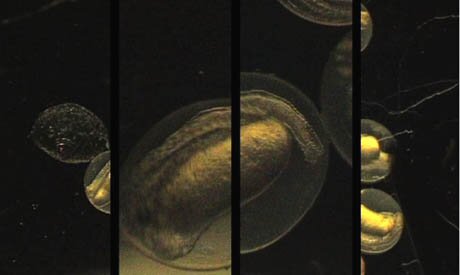
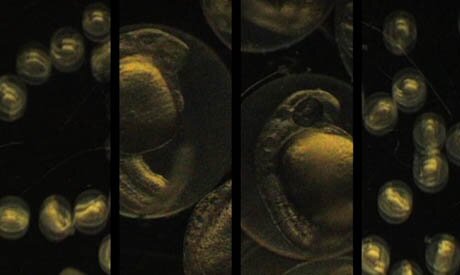 The Londonist
]]>
The Londonist
]]>
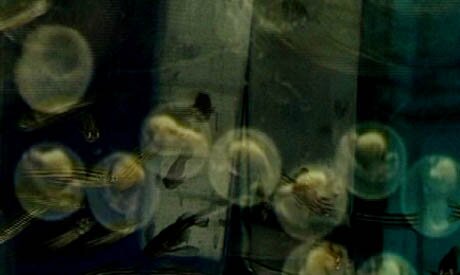 Video document as part of an international project
EVOLUTION HAUTE COUTURE: ART AND SCIENCE IN THE POST-BIOLOGICAL AGE
Curated by Dmitry Bulatov on themes associated with technologies of the XXI Century as a medium of implementation in the field of artificial life, robotics and bioengineering.
Special Art Project of the Third Moscow Biennial of Contemporary Art
LABORATORIA Art&Science Space (3, Obukha per., Moscow)
Organizers of the project: Kaliningrad Branch of the National Centre for Contemporary Arts, LABORATORIA Art&Science Space
In 2009 the Evolution Haute Couture project won the National Innovation Prize (Russia), awarded annually for achievements in contemporary visual arts.
Project curator: Dmitry Bulatov
Featuring: Paula Gaetano Adi (AR), James Auger & Jimmy Loizeau (GB), Brandon Ballengee (US), Laura Beloff (FI), BioKino Group: Tanya Visosevic and Guy Ben-Ary (AU), David Bowen (US), Adrian David Cheok (SG), Carlos Corpa & Ana García-Serrano (ES), Critical Art Ensemble (US), Joe Davis (US), Marta de Menezes (PT), Louis-Philippe Demers (CA), Erwin Driessens & Maria Verstappen (NL), Tagny Duff (CA), Arthur Elsenaar & Remko Scha (NL), Julie Freeman (GB), George Gessert (US), Ken Goldberg (US), Isa Gordon (US), Andy Gracie (GB), Paul Granjon (FR), Mateusz Herczka (SE), Floris Kaayk (NL), Verena Kaminiarz (CA), Leonel Moura (PT), Orlan (FR), Plancton Art Studio: Mauro Annunziato & Piero Pierucci (IT), Nicolas Reeves (CA), Julia Reodica (US), Ken Rinaldo (US), Marcel·lí Antúnez Roca (ES), Kathleen Rogers (GB), Philip Ross (US), SymbioticA Research Group (AU) & The Potter Lab (US), Stelarc (AU), The Tissue Culture & Art Project (TC&A): Oron Catts and Ionat Zurr (AU), Paul Thomas (AU), Bill Vorn, Emma Howes & Jonathan Villeneuve (CA), Natasha Vita-More (US), Adam Zaretsky (US)
EXHBITION BOOK AND ARTWORK IN PERMANENT MUSEUM COLLECTION
Evolution Haute Couture: Art and Science in the Post-Biological Age. Edited by Dmitry Bulatov. With a foreword by Dmitry Bulatov and essays by Roy Ascott, Dmitry Bulatov. Russian-English edition, and extensive glossary, color and black-and-white illustrations, 196 pages, catalogue + 2 DVD-ROM, KB NCCA, Kaliningrad, 2009. Web site: www.videodoc.ncca-kaliningrad.ru/
Supported by
The Ministry of Culture of the Russian Federation, The Ford Foundation (The Moscow Office, Russia), The Dynasty Foundation (Moscow), Karpov Institute of Physical Chemistry (Moscow)
Further exhibition in the framework of the IX MediaForum 2008 as part of the XXX Moscow International Film Festival (MIFF).
]]>
Video document as part of an international project
EVOLUTION HAUTE COUTURE: ART AND SCIENCE IN THE POST-BIOLOGICAL AGE
Curated by Dmitry Bulatov on themes associated with technologies of the XXI Century as a medium of implementation in the field of artificial life, robotics and bioengineering.
Special Art Project of the Third Moscow Biennial of Contemporary Art
LABORATORIA Art&Science Space (3, Obukha per., Moscow)
Organizers of the project: Kaliningrad Branch of the National Centre for Contemporary Arts, LABORATORIA Art&Science Space
In 2009 the Evolution Haute Couture project won the National Innovation Prize (Russia), awarded annually for achievements in contemporary visual arts.
Project curator: Dmitry Bulatov
Featuring: Paula Gaetano Adi (AR), James Auger & Jimmy Loizeau (GB), Brandon Ballengee (US), Laura Beloff (FI), BioKino Group: Tanya Visosevic and Guy Ben-Ary (AU), David Bowen (US), Adrian David Cheok (SG), Carlos Corpa & Ana García-Serrano (ES), Critical Art Ensemble (US), Joe Davis (US), Marta de Menezes (PT), Louis-Philippe Demers (CA), Erwin Driessens & Maria Verstappen (NL), Tagny Duff (CA), Arthur Elsenaar & Remko Scha (NL), Julie Freeman (GB), George Gessert (US), Ken Goldberg (US), Isa Gordon (US), Andy Gracie (GB), Paul Granjon (FR), Mateusz Herczka (SE), Floris Kaayk (NL), Verena Kaminiarz (CA), Leonel Moura (PT), Orlan (FR), Plancton Art Studio: Mauro Annunziato & Piero Pierucci (IT), Nicolas Reeves (CA), Julia Reodica (US), Ken Rinaldo (US), Marcel·lí Antúnez Roca (ES), Kathleen Rogers (GB), Philip Ross (US), SymbioticA Research Group (AU) & The Potter Lab (US), Stelarc (AU), The Tissue Culture & Art Project (TC&A): Oron Catts and Ionat Zurr (AU), Paul Thomas (AU), Bill Vorn, Emma Howes & Jonathan Villeneuve (CA), Natasha Vita-More (US), Adam Zaretsky (US)
EXHBITION BOOK AND ARTWORK IN PERMANENT MUSEUM COLLECTION
Evolution Haute Couture: Art and Science in the Post-Biological Age. Edited by Dmitry Bulatov. With a foreword by Dmitry Bulatov and essays by Roy Ascott, Dmitry Bulatov. Russian-English edition, and extensive glossary, color and black-and-white illustrations, 196 pages, catalogue + 2 DVD-ROM, KB NCCA, Kaliningrad, 2009. Web site: www.videodoc.ncca-kaliningrad.ru/
Supported by
The Ministry of Culture of the Russian Federation, The Ford Foundation (The Moscow Office, Russia), The Dynasty Foundation (Moscow), Karpov Institute of Physical Chemistry (Moscow)
Further exhibition in the framework of the IX MediaForum 2008 as part of the XXX Moscow International Film Festival (MIFF).
]]>